
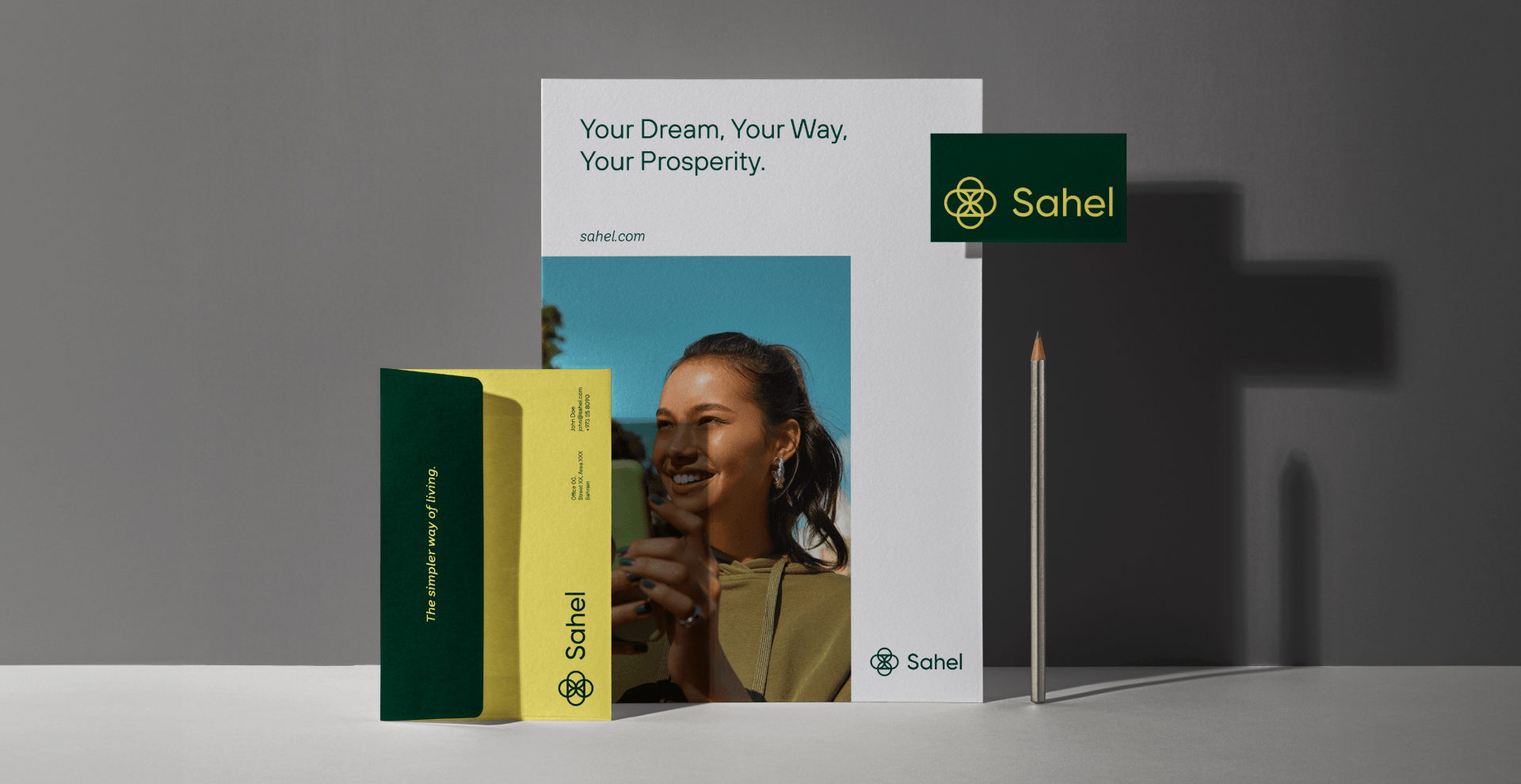
The expensive mistake is not paying too much for a logo. It is hiring a design partner for a logo when your real problem is clarity, consistency, and trust. That is why choosing a branding agency should not start with portfolio style alone. A strong agency should help you understand whether you need a logo refresh, a complete identity system, verbal identity, brand guidelines, launch assets, or a deeper rebrand.
This guide explains what a branding agency should deliver, how brand identity vs logo design affects project scope, what to ask before hiring, and how UAE/GCC businesses can avoid paying for isolated design assets when they need a working brand system.
60-Second Summary
- A branding agency creates the visual and verbal system that helps a business look, sound, and behave consistently.
- A logo designer may solve recognition. A branding agency should solve consistency, perception, usability, and rollout.
- Strong identity work includes strategy inputs, logo suite, colour, typography, imagery, messaging, tone of voice, guidelines, and launch ready applications.
- UAE/GCC businesses often need identity systems when launching, entering a new market, scaling marketing spend, or preparing investor facing communication.
- The right scope may be logo refresh, identity refresh, full rebrand, or strategy-first engagement.
- Choose branding design agencies by process, thinking, deliverables, senior involvement, and implementation support, not visual taste alone.
What does a branding agency do?
A branding agency creates the visual and verbal system a business uses to appear consistent across every customer touchpoint. This usually includes logo design, colour palette, typography, imagery style, messaging, tone of voice, brand guidelines, and launch-ready applications such as websites, decks, packaging, signage, and social templates.
The agency’s job is not just to make the business “look better.” It is to make the business easier to recognise, understand, trust, and apply across channels.
A serious identity system should reduce day-to-day design decisions, not create more of them. If every sales deck, social post, landing page, or event banner needs to be redesigned from scratch, the identity is not finished. It may look good in presentation format, but it has failed in use.

For a UAE retail launch, that difference matters quickly. The brand may need packaging, shelf material, e-commerce assets, mall signage, influencer content, delivery packaging, paid ads, and Arabic-English messaging within the same launch window. A logo alone cannot govern that system.
How a branding agency identity differs from a logo designer
A logo designer usually focuses on the mark: the symbol, wordmark, lockup, and basic visual usage. That can be useful when the business has a narrow problem and a clear existing brand system.
A branding agency should work at a wider level. It should connect business direction, audience perception, visual identity, verbal identity, guidelines, and rollout. The output is not one asset. It is a system your team can use.
| Provider type | Typical focus | Best for | Risk if scope is wrong |
|---|---|---|---|
| Logo designer | Logo mark, wordmark, lockups | Small, low-complexity visual needs | The business still lacks consistency across channels |
| Graphic designer | Designed assets and layouts | Campaigns, collateral, templates | Assets may look good but lack strategic coherence |
| Design agency | Visual and verbal identity system | Launches, rebrands, growth, market entry | Higher investment, so scope must be clear |
| Branding agency | Strategy, identity, communication, campaigns | Larger brand transformation or ongoing brand building | Can become too broad if deliverables are not defined |
The choice is not about which provider is “better.” It is about whether the business problem is narrow or systemic.
Why this matters for UAE/GCC launches and rebrands
In many UAE/GCC categories, businesses enter markets where customers are already exposed to polished competitors. Real estate, hospitality, retail, FMCG, wellness, education, fintech, and corporate services all rely heavily on first impressions across digital, physical, and sales-led environments. Customers may not name the issue, but inconsistent identity can make a brand feel fragmented, improvised, or less credible than its competitors. Investors and partners also judge signals of seriousness: presentation quality, message clarity, brand discipline, and whether the business knows how to explain itself. A weak identity does not mean the business is weak. It means the market may not see its strength clearly enough.
Brand identity vs logo design: the difference that affects scope
A logo identifies. A brand identity creates consistent perception.
That sentence is the simplest way to understand brand identity vs logo design. A logo is one part of brand identity, but it cannot carry the full weight of the brand. It cannot define messaging, tone, campaign hierarchy, website structure, packaging rules, or how the business should show up across markets. A logo is not a strategy in miniature. It can signal the brand, but it cannot define business direction, audience promise, or communication behaviour.

A Dubai hospitality startup commissions a premium-looking logo before launch. The logo appears on the storefront. But the menu feels casual, the booking website feels corporate, the Instagram content feels playful, the uniforms feel generic, and the investor deck uses a different style again. The logo is not the failure. The missing identity system is.
A logo is a recognition device
A logo is a symbol, wordmark, monogram, or lockup that identifies a business. It should be distinctive, legible, usable at different sizes, and technically fit for digital, print, signage, packaging, and small-space applications.
Logo design matters. A poor mark can create real problems: weak recall, poor reproduction, limited usability, and inconsistent application. But even a strong logo has limits. It cannot tell your sales team how to write a proposal. It cannot tell your social team how layouts should behave. It cannot tell your web team how to express hierarchy. It cannot tell your launch team what the campaign should feel like.
Brand identity is a visual and verbal system
Brand identity is the system behind recognition and consistency. It includes what the brand looks like, what it sounds like, and how it adapts across touchpoints. That system usually includes logo suite, colours, typography, layout, imagery, iconography, motion principles, tone of voice, messaging pillars, tagline logic, naming conventions, templates, and brand guidelines.
Strong identity work answers five practical questions:
| The Brand System Test | What the identity should answer |
|---|---|
| What should this look like? | Visual rules, hierarchy, layout, imagery |
| What should this sound like? | Tone, messaging, vocabulary, claims |
| What should customers believe? | Positioning, value proposition, proof |
| How should this adapt by channel? | Website, social, packaging, signage, decks |
| Who protects consistency? | Guidelines, approval rules, governance |
If the identity cannot answer these questions, your team will keep improvising.
Branding is how the system is applied over time
Branding is the broader activity of shaping perception. It includes strategy, identity, messaging, campaigns, customer experience, internal behaviour, and repeated market presence. Brand identity is the designed system. Branding is the ongoing application of that system. This is why two companies can both have polished logos, yet one feels more credible. The difference is usually not the mark alone. It is how consistently the brand behaves across every interaction.
What should a complete brand identity include?
A complete identity system should be built for use, not presentation. The work should help internal teams, agencies, developers, photographers, printers, and campaign partners create brand assets without guessing.
For a real estate developer, this might include hoarding, sales centre material, brochures, paid ads, investor decks, website pages, portal listings, event branding, and Arabic-English communication. For an FMCG business, packaging hierarchy, shelf recognition, product variants, delivery assets, and social commerce may matter more. The deliverables should match the business model, channels, market, and stage of growth.
Agency deliverables checklist
| Level | Deliverables | When needed |
|---|---|---|
| Essential | Brand strategy concise, Logo suite, colour palette, typography, basic visual rules, core applications | Small launches, early-stage businesses, limited channels |
| Recommended | Brand strategy succinct, Messaging pillars, tone of voice, imagery style, templates, brand guidelines, social and deck systems | Public launches, marketing spend, sales teams, multi-channel brands |
| Advanced | Brand strategy detailed, verbal identity, naming system, brand architecture, campaign platform, website/app design direction, governance training | Rebrands, market entry, corporate groups, real estate, hospitality, FMCG, investor-facing brands |
The issue is not whether every business needs every deliverable. The issue is whether the chosen scope matches the commercial pressure the brand will face.
Strategy and positioning inputs
Identity should begin with direction. Before design, the agency should clarify what the brand must achieve, who it must influence, what category it competes in, and what perception it needs to own. This does not always require a long strategy phase. But it does require enough strategic clarity to prevent subjective design decisions.
A useful agency will ask about business goals, audience segments, competitors, pricing, sales process, launch channels, language needs, investor expectations, and internal decision-making. Without that input, the identity risks becoming attractive but arbitrary.
Logo suite and visual identity assets
A complete visual identity usually includes a primary logo, secondary logo, icon or mark, horizontal and stacked versions, monochrome versions, clear-space rules, colour palette, typography, layout principles, imagery direction, icon style, graphic devices, and usage examples. The difference between weak and strong identity work often appears in application.
| Weak identity work | Strong identity work |
|---|---|
| Shows the logo on mockups only | Shows how the system works across real channels |
| Provides colours without usage rules | Defines hierarchy, contrast, accessibility, and context |
| Selects fonts without type behaviour | Explains headings, body copy, captions, and digital use |
| Uses generic stock imagery | Defines art direction and image principles |
| Ends with files | Ends with files, rules, templates, and rollout logic |
A good identity is not just approved. It is usable.
Verbal identity and messaging
A business does not only need to look coherent. It needs to speak coherently.
Verbal identity includes tone of voice, messaging pillars, value proposition, tagline logic, product naming principles, service language, proof points, and audience-specific messaging. In the UAE/GCC, this may also include Arabic-English expression principles and different levels of formality across audiences. The same hospitality concept could sound warm and sensory, a technology platform could sound precise and efficient, and a real estate developer could sound assured, place-led, and investment-aware. If all three sound the same, the verbal identity is not doing its job.
Brand guidelines and governance
Brand guidelines protect the system after launch. They should show what to do, what not to do, and how to adapt the identity across channels. Useful guidelines include logo usage, spacing, colour rules, type hierarchy, imagery examples, layout principles, tone of voice, message examples, templates, campaign adaptation, and approval guidance. Governance matters because brands are rarely managed by one person. As teams grow, more people touch the identity. Guidelines reduce accidental reinvention.
Launch-ready applications
Identity becomes valuable when it appears in the real world. That may include website direction, app screens, social templates, pitch decks, sales decks, packaging, signage, menus, uniforms, brochures, investor material, event branding, email signatures, stationery, paid media layouts, and internal templates.
In our work, this is where Brand Identity connects naturally with Brand Strategy, Brand Communication, Website/App Design, and Social Media Strategy. The identity should prepare the business to communicate, not leave it with beautiful files and unanswered questions.
When is a logo enough?
A logo may be enough when the business has low complexity, limited public visibility, few channels, and clear existing strategy. Not every project needs a full brand identity engagement. A temporary event, internal initiative, early validation project, small side venture, or limited campaign may only need a logo lockup, simple colour rules, and a few usage examples. Paying for a complete identity system before the offer, audience, or business model is clear can create unnecessary cost. The danger is assuming every business is in that low-complexity category. Once the business needs to persuade customers, investors, tenants, guests, distributors, retailers, or partners across multiple channels, logo-only work becomes fragile. It may save budget at the start, then cost more through redesign, inconsistency, duplicated effort, and unclear communication.
When do you need a full brand identity system?
You need a full brand identity system when the business must show up consistently across several channels, audiences, and commercial moments. This is often the case during launch, market entry, rebrand, fundraising, expansion, category repositioning, or increased marketing spend. If identity remains inconsistent while marketing spend increases, the business is effectively paying to make confusion more visible.

Launching in a competitive category
A UAE wellness brand opens with a clinic, e-commerce store, influencer campaign, appointment platform, uniforms, signage, and educational content. A logo can identify the brand. It cannot define the tone of medical credibility, the retail packaging system, the social content style, and the appointment journey. A full identity gives the launch discipline from day one.
Entering the UAE/GCC market
Market-entry brands often need to decide what should remain global, what should adapt locally, and how the brand should behave in Arabic-English communication environments. This is not about making the brand look “regional” for the sake of it. It is about making sure the brand feels relevant, clear, and credible in the market it is entering.
Scaling marketing spend
When more money goes into paid media, social content, events, PR, and sales activity, inconsistency becomes more expensive. The issue is not only visual. Mixed messages weaken recall. Conflicting claims confuse buyers. Unclear design systems slow production. A full identity helps marketing teams move faster without drifting off-brand.
Appealing to investors, partners, or premium customers
Investor-facing and premium brands need to signal seriousness. A weak identity can make a strong business look underdeveloped, especially when pitch decks, websites, proposals, and launch assets feel disconnected. Identity cannot replace financial performance, product quality, or operational discipline. But it can make the business easier to understand, remember, and believe.
Not sure whether you need a logo refresh, identity system, or full rebrand? Book a Brand Consultation and clarify the right scope before investing in design.
Logo refresh, identity refresh, or full rebrand?
The right scope depends on the business problem. Is the issue recognition, consistency, relevance, or positioning?
Diagnose before you design.
| Business symptom | Recommended scope | What changes | What stays protected |
|---|---|---|---|
| The logo feels dated, but recognition is strong | Logo refresh | Mark refinement, type tuning, colour adjustment | Name, positioning, core equity |
| Marketing looks inconsistent across channels | Identity refresh | Visual system, templates, guidelines, applications | Useful recognition and existing equity |
| Messaging and design both feel unclear | Strategy + identity | Positioning, value proposition, identity, messaging | Only what still supports the business |
| Audience, offer, or category has changed | Full rebrand | Strategy, identity, verbal identity, rollout | Selected equity after audit |
| New market entry creates relevance questions | Strategy-led adaptation | Market positioning, language, identity application | Parent or global brand logic where useful |
A B2B services firm has a dated logo, inconsistent proposals, unclear website messaging, and generic LinkedIn content. A logo refresh improves the surface, but the sales problem remains. A better solution may include positioning, refreshed identity, messaging pillars, proposal templates, website direction, and a clearer sales narrative.
How our Brand-to-Communication Bridge connects strategy to rollout
Once a business knows it needs more than a logo, the next question is not just what to design. It is how strategy becomes a working system. Our Brand-to-Communication Bridge connects brand thinking with communication rollout.
| Stage | What we clarify | Output |
|---|---|---|
| Business direction | What the brand must achieve | Brand objective and positioning |
| Audience perception | What customers must believe | Differentiation and value proposition |
| Identity system | What the brand looks and feels like | Logo, colour, typography, imagery, layout |
| Verbal identity | What the brand sounds like | Tone of voice, key messages, naming logic |
| Communication rollout | How the brand shows up | Website, pitch deck, social, campaigns, signage, packaging |
| Governance | How consistency is protected | Brand guidelines and usage rules |
Design without direction is decoration with a deadline.
Strategy before style
Before choosing colours or refining marks, we need to understand what the business wants customers to understand and remember. This includes category position, audience needs, competitive difference, pricing context, and growth ambition. Without that clarity, identity decisions become subjective.
Identity before campaigns
Campaigns need a stable identity system. Otherwise, every campaign becomes a reinvention exercise. A clear identity gives campaigns room to flex without losing recognition. It creates boundaries, then allows creative variation inside them.
Guidelines before scale
As businesses grow, more people touch the brand. Internal teams, agencies, freelancers, photographers, developers, printers, and event partners all need rules. Guidelines protect the brand from slow dilution. They also reduce the cost of repeated explanation.
Communication before market spend
A brand can attract attention and still fail to convert it into understanding. That often happens when campaigns are launched before the identity and messaging are clear. Our approach connects identity to the communication that must carry it: websites, decks, launch campaigns, social systems, signage, packaging, and customer-facing content.
How to choose a branding agency
Because identity work can range from a simple package with less deliverables to a full strategic system, the agency selection process should focus on capability, not taste alone.
Aesthetic fit matters. But portfolio style is evidence, not the whole case. A good agency should be able to explain the business problem, the strategic logic, the system behind the design, and how the identity performs across real applications.

Agency A presents beautiful logo mockups on tote bags and signage. Agency B explains the audience problem, competitor context, identity system, messaging hierarchy, launch applications, and guidelines. Agency A may be talented. Agency B is easier to trust with a business-critical identity project.
Questions to ask before hiring
Use these questions before appointing a branding agency:
- How do you define the business problem before design?
- What is included beyond the logo?
- Will we receive brand guidelines and usable templates?
- Can you support messaging and verbal identity?
- How do you approach UAE/GCC audiences, bilingual needs, or market-entry contexts?
- Can you apply the identity across website, social, packaging, signage, decks, and campaigns?
- Who leads the strategic thinking?
- What does your process look like from discovery to rollout?
- What proof can you show beyond final visuals?
- How do you help internal teams use the identity after launch?
These questions reveal whether the agency is selling design output or building brand infrastructure.
What to look for in the portfolio
Do not judge the portfolio by taste alone. Look for evidence of system thinking.
A useful portfolio should show the identity across several applications, not just the logo. It should demonstrate how colour, typography, imagery, layout, messaging, and templates work together. It should also explain the business context behind the work. For UAE/GCC businesses, relevant category understanding can matter. A hospitality identity has different pressures from a real estate identity. FMCG packaging has different constraints from a corporate group identity. A market-entry brand has different questions from a local startup.
Red flags
Be cautious if the agency offers logo-only packages for a complex launch without discovery, audience review, category understanding, guidelines, or rollout planning.
Other red flags include no senior strategic involvement, no verbal identity capability, no application examples, no discussion of governance, no clarity on file ownership, and no explanation of what is excluded. A good agency should make the decision clearer before work begins. If the scope feels vague at proposal stage, it rarely becomes clearer during production.
Agency evaluation scorecard
| Criteria | What strong looks like | Score 1-5 |
|---|---|---|
| Strategic discovery | Clear questions about business, audience, category, and goals | 4 |
| Identity system thinking | Shows more than logo design; explains rules and applications | 2 |
| Verbal identity capability | Can define messaging, tone, and language principles | 1 |
| UAE/GCC relevance | Understands local, regional, bilingual, and category realities | 3 |
| Rollout support | Can support website, social, decks, signage, packaging, or campaigns | 5 |
| Guidelines and governance | Provides practical rules, templates, and usage examples | 4 |
| Senior involvement | Strategy and creative direction are led by experienced people | 1 |
| Proof quality | Shows rationale, process, case examples, or implementation evidence | 1 |
A high score does not guarantee the right fit, but it makes comparison less emotional and more commercial.
Before briefing a designer or agency, clarify the business problem first. Book a Brand Consultation to define the right brand identity scope for your next stage of growth.
Brand identity brief checklist before you hire an agency
A better brief leads to better identity work. It helps the agency understand the commercial problem before design begins and helps your internal team align before opinions multiply.
The brief is not admin. It is the first strategic act.
| Briefing area | What to prepare | Why it matters |
|---|---|---|
| Business objective | Launch, rebrand, market entry, growth, repositioning | Defines the identity’s commercial job |
| Target audience | Customers, investors, tenants, guests, distributors, partners | Shapes tone, proof, and visual cues |
| Competitive set | Direct and indirect competitors | Prevents category sameness |
| Brand positioning | Current or intended market position | Gives design strategic direction |
| Existing assets | Logo, decks, website, campaigns, photography, guidelines | Shows what to keep, fix, or retire |
| Required applications | Website, app, social, packaging, signage, sales tools | Ensures the system is built for use |
| Markets and languages | UAE, KSA, GCC, Arabic, English, other languages | Guides cultural and verbal decisions |
| Decision-makers | Founder, CEO, CMO, board, parent company | Reduces approval friction |
| Timeline | Launch date, campaign dates, retail opening, investor pitch | Protects sequencing |
| Internal constraints | Legal, compliance, parent brand, franchise rules | Prevents late-stage conflict |
The checklist also reveals the likely scope. If you only need one mark for a temporary initiative, logo design may be enough. If the identity must work across launch campaigns, sales decks, digital channels, signage, packaging, and investor communication, the business needs a wider system.
FAQs about branding agencies
What does a branding agency do?
A branding agency turns business direction into a usable visual and verbal system. This can include logo design, colours, typography, imagery, messaging, tone of voice, brand guidelines, templates, and launch applications. The goal is consistency across customer touchpoints, not just a more attractive logo.
How is a branding agency different from a logo designer?
A branding agency gives you access to an experienced, accountable team with different strengths, broader industry expertise, and long-term support, while an individual logo designer may offer a narrower scope with less continuity or accountability.
What deliverables should I expect from a branding agency?
Core deliverables often include logo suite, colour palette, typography, imagery direction, layout rules, messaging, tone of voice, brand guidelines, and selected applications. Depending on scope, the agency may also support naming, brand strategy, website design direction, social templates, packaging, signage, and campaign assets.
How long does brand identity design usually take?
Timelines depend on scope, decision-makers, research depth, and required applications. A narrow logo refresh may be faster than a full identity system with strategy, verbal identity, guidelines, and rollout assets. Businesses should ask agencies to explain project phases, review points, dependencies, and what could delay approval.
What affects the cost of brand identity design?
Cost is shaped by scope, strategic depth, number of deliverables, senior involvement, market research, verbal identity, brand guidelines, applications, and rollout support. A package with less deliverables costs less because it solves a smaller problem. A full identity system costs more because it must work across more business-critical touchpoints.
Who should be involved from the client side?
The right team usually includes the founder, CEO, CMO, marketing lead, and anyone responsible for sales, product, operations, or market launch. Too few decision-makers can miss important context. Too many can slow decisions. The best setup gives input widely, but approval authority clearly.
How do I compare branding design agencies?
Compare agencies by strategic process, system thinking, category understanding, verbal identity capability, implementation support, guidelines, senior involvement, and proof of work in real applications. Do not choose by visual taste alone. Ask each agency to explain the problem behind the portfolio, not only the final design.
Do startups need a branding agency or just a logo?
Startups still need to go through brand strategy, even if condensed, before developing a logo, visual identity, messaging, and the broader brand system needed for launch, investment, sales, and market growth.
The right scope depends on the business problem: logo refresh, identity refresh, full rebrand, or strategy-first engagement. We help UAE/GCC businesses define that scope before investing in design.
Clarify the right identity scope. Book a Brand Consultation.